Why do commercial trucks need GVWR lettering displayed?
Federal USDOT marking rules do not require GVWR lettering; the official rating is on the manufacturer's certification label on the driver's door frame. Carriers add GVW lettering because certain state permits, municipal contracts, insurers or fleet policies ask for it, and because it lets inspectors see at a glance which weight rules apply.
GVW lettering facts
Topic
Explanation
Federal marking
49 CFR 390.21 requires the carrier name and USDOT number only, not weight.
Official GVWR
Printed on the manufacturer certification label near the driver's door under 49 CFR 567.4.
When GVW lettering is asked for
Some state or local permits, government or utility contracts, insurers, and fleet policies require weight markings.
Why it helps
GVW tells inspectors whether 10,001-lb or 26,001-lb thresholds apply without opening the door.
How to letter it
Copy the GVWR exactly from the certification label, e.g. "GVW 26,000 LBS," under the USDOT line.
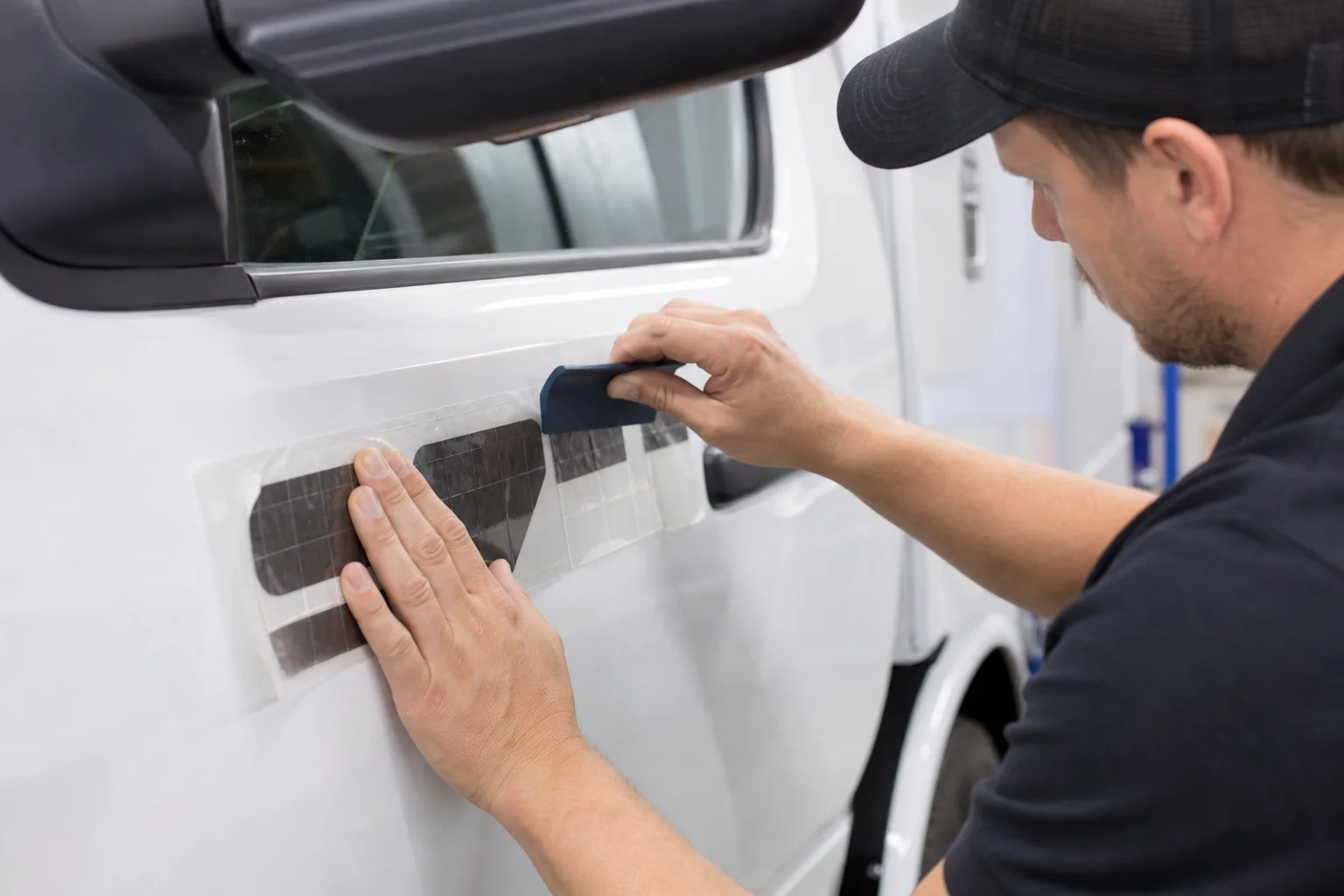
Send the exact figures from the certification label and any permit or contract wording you were given. Same Day Vinyl can combine USDOT, MC, GVW and unit numbers in one matched door set.
Related questions
Is GVW lettering required by FMCSA?
No. The federal marking rule covers the carrier name and USDOT number. GVW lettering comes from state, permit, contract or company requirements.
What is the difference between GVW and GVWR?
GVWR is the manufacturer's maximum rated weight, printed on the certification label. GVW is the vehicle's actual loaded weight at a given moment. Lettering normally shows the rating.
Do weigh stations check GVW lettering?
Inspectors weigh the vehicle and check registration and the certification label. Lettering is a quick visual reference, not a substitute for those documents.
Official references reviewed November 2, 2026. Confirm current applicability with the issuing authority; production recommendations do not certify compliance.